STRAIGHT FROM STORLIE PITS
GRAVEL, SAND, AND ROCK BY THE YARD.
Every product on this page comes out of Storlie's own regional pit operations. The Highway 2 yard between Bemidji and Cass Lake is the home base shown throughout the site, with additional pit access toward Walker, Nevis, and other communities. Stock and pickup options vary by location, so call with the material and address before heading out. Everything is sold and quoted by the cubic yard. Find your material below, run it through the calculator, and call with a yardage already in hand.
One thing worth knowing up front: Storlie supplies the full MnDOT gravel lineup, Classes 1, 2, 3, and 5, not just the driveway product. That is the same material family used on township and county roads, and it is a different operation than a landscape yard that happens to sell gravel.
BASE AND ROAD GRAVEL.
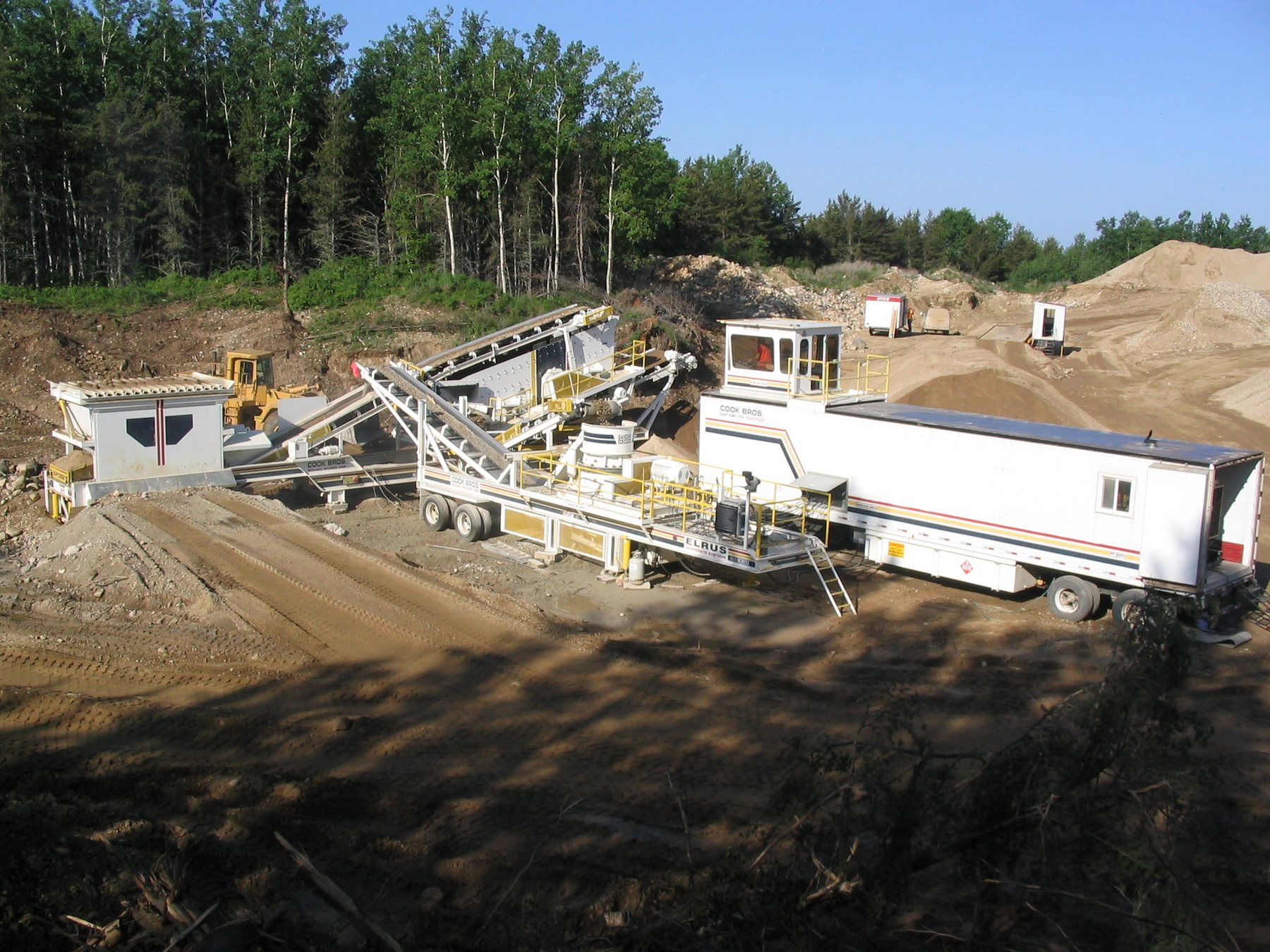
All four gravels below come from one playbook, MnDOT Spec 3138. In plain terms: Class 5 is the base product that compacts into a hard working surface, Class 1 and Class 2 are surfacing gravels built to be the road you actually drive on, and Class 3 is the coarse layer that goes down first when the ground is soft. They all get called gravel. They do different jobs.
CLASS 5 GRAVEL
The Minnesota default. Crushed rock, sand, and fines blended to the MnDOT 3138 base gradation, with at least a quarter of the particles crusher-fractured so they lock together. It compacts tight, sheds water, and carries load through freeze and thaw.
Use it for: new driveways and driveway repair, road base, building pads, parking areas, and resurfacing a washboarded drive.
Sold and quoted by the cubic yard.
Good to know: spread it in reasonable lifts and compact as you go. Dump it too deep in one pass and it will not lock up right.
CLASS 1 GRAVEL
A surfacing gravel, meaning it is graded and bound to be the finished road surface, not a base under something else. The fines carry natural binder so a maintained gravel road tightens under traffic instead of raveling apart.
Use it for: gravel road surfacing and resurfacing, township and private road maintenance, and long rural lanes kept as gravel.
Sold and quoted by the cubic yard.
Good to know: Class 1 and Class 5 are not interchangeable. Class 5 is a base. Class 1 is the surface you drive on. If you are topping an existing gravel road, this is usually the conversation to have.
CLASS 2 GRAVEL
The premium surfacing gravel. By spec, Class 2 must be one hundred percent crushed quarry rock, no natural uncrushed material allowed. All that fractured, angular stone interlocks into a harder wearing surface.
Use it for: high-traffic gravel roads, driveways that take a beating, parking lots, and anywhere a fully crushed surface is worth the upgrade.
Sold and quoted by the cubic yard.
Good to know: the one hundred percent crushed requirement is the spec talking, not a sales line. It is the honest reason Class 2 wears harder than a blended gravel.
CLASS 3 GRAVEL
The subbase. Class 3 runs up to a 2 inch top size, noticeably bigger stone than Class 5, and its job is to stabilize soft, wet, or unstable ground before the finer base goes down.
Use it for: firming up a soft roadbed, subbase under Class 5 or pavement, and building up a pad on poor soil.
Sold and quoted by the cubic yard.
Good to know: this is not a topping material. It goes down first and gets covered. If your site is soft or wet, ask about Class 3 before you order the finish gravel.
SAND.
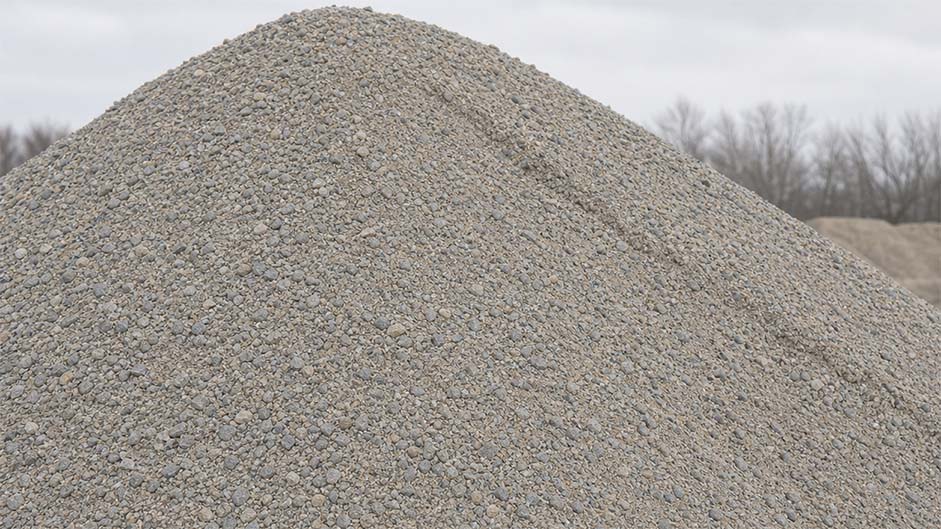
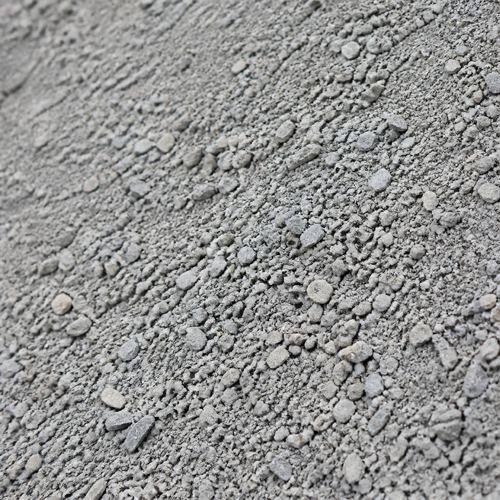
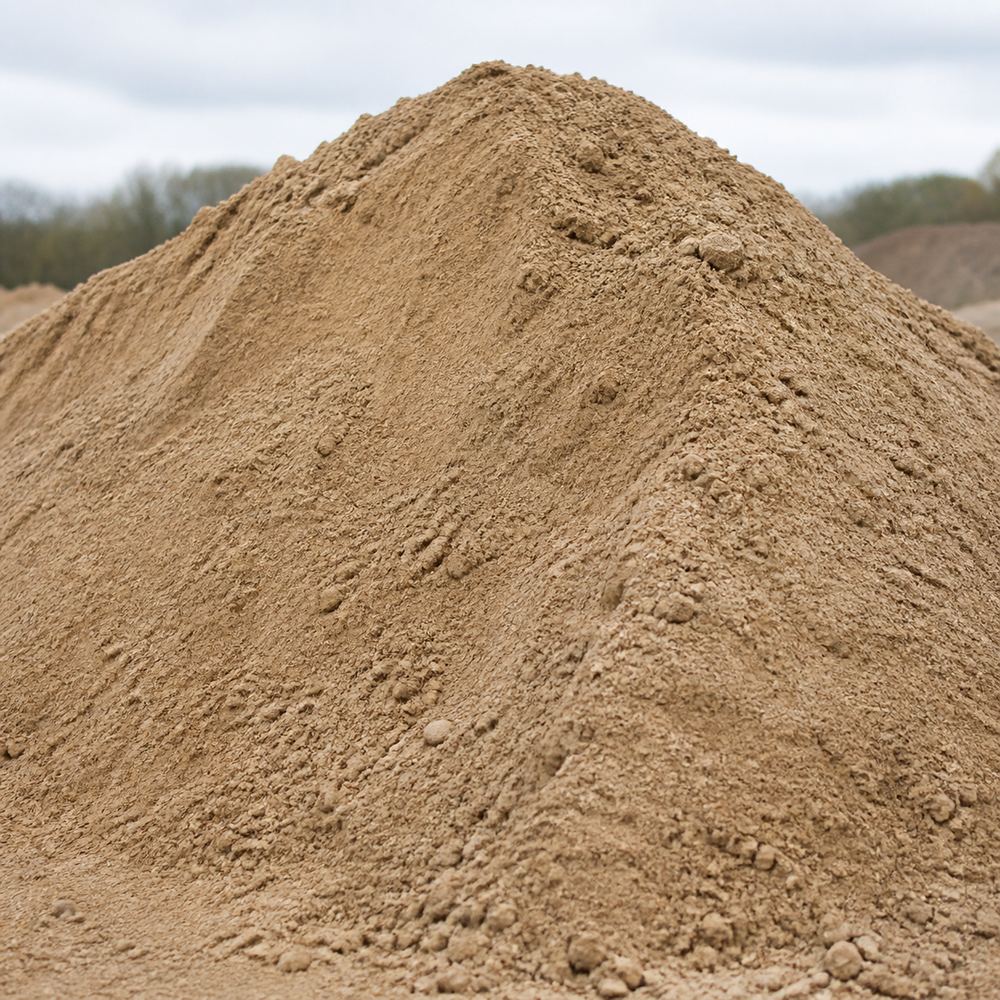
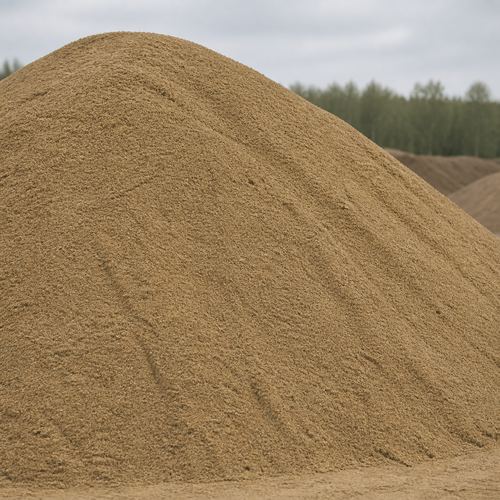
Three sands, and the difference is entirely in the processing. Pit run comes straight out of the ground. Screened sand has the oversize pulled out but keeps its natural fines. Washed sand is screened and then water-washed clean. Pick by the job, not by the price.
PIT RUN SAND
Unscreened, unwashed sand straight from the pit, naturally mixed with some gravel and fines. The economical bulk product when volume matters more than uniformity.
Use it for: raising low ground, building up pads before gravel, backfilling large excavations, and general site grading.
Sold and quoted by the cubic yard.
Good to know: this is fill, plain and simple. It is not a septic or concrete product, and it is the right answer precisely when you do not need one.
SCREENED SAND
Run through the screening plant to pull the oversize rock and debris, but not washed. The retained fines help it compact and sit still.
Use it for: bedding under pavers, slabs, and pipe, leveling courses, and backfill where you want the sand to pack.
Sold and quoted by the cubic yard.
Good to know: the practical middle option. More consistent than pit run, more affordable than washed, right for the work nobody sees.
WASHED SAND
Screened and then washed with water to strip out the silt and dust, leaving a clean, uniform sand.
Use it for: topping a swimming beach, drainage layers, pipe bedding, paver joints, and concrete work by arrangement.
Sold and quoted by the cubic yard.
Good to know: jobs with a written spec deserve a direct conversation. Septic mound sand has to match your system design, and concrete sand has its own gradation, so tell us what the plan calls for and we will talk through whether our washed sand fits or what would.
SEPTIC AND DRAIN ROCK.
SEWER ROCK
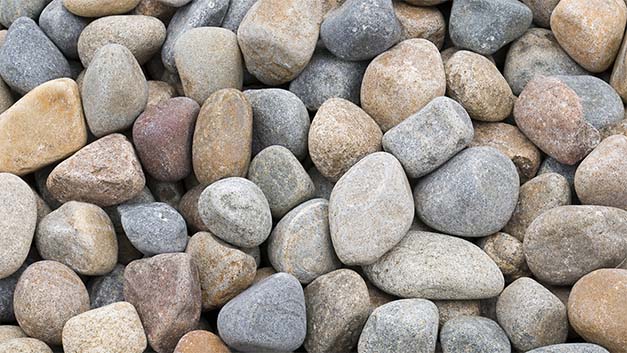
Sewer rock, also called septic rock, drain rock, or washed drainfield rock, is clean washed stone with the fines rinsed out so water moves through it instead of plugging it. Minnesota's drainfield standard allows no more than one percent fines in this rock, which is exactly why it gets washed.
Use it for: septic drainfields, French drains and drain tile, foundation perimeter drainage, and drainage layers under structures.
Sold and quoted by the cubic yard.
Good to know: your licensed septic installer signs off on rock quality at delivery, that is how the state rule works. Tell us the system design and we will make sure what goes on the truck is washed and sized for drainfield use. And because it has no fines, sewer rock does not compact into a base. Do not use it where you need Class 5.
RECYCLED AND BUDGET BASE.
Crushed asphalt and crushed concrete are not off-spec seconds. MnDOT's own gravel spec publishes gradation tables for recycled blends, which means recycled aggregate is sanctioned under the same document as Class 5. These are the budget-smart choices, each with an honest tradeoff.
CRUSHED ASPHALT
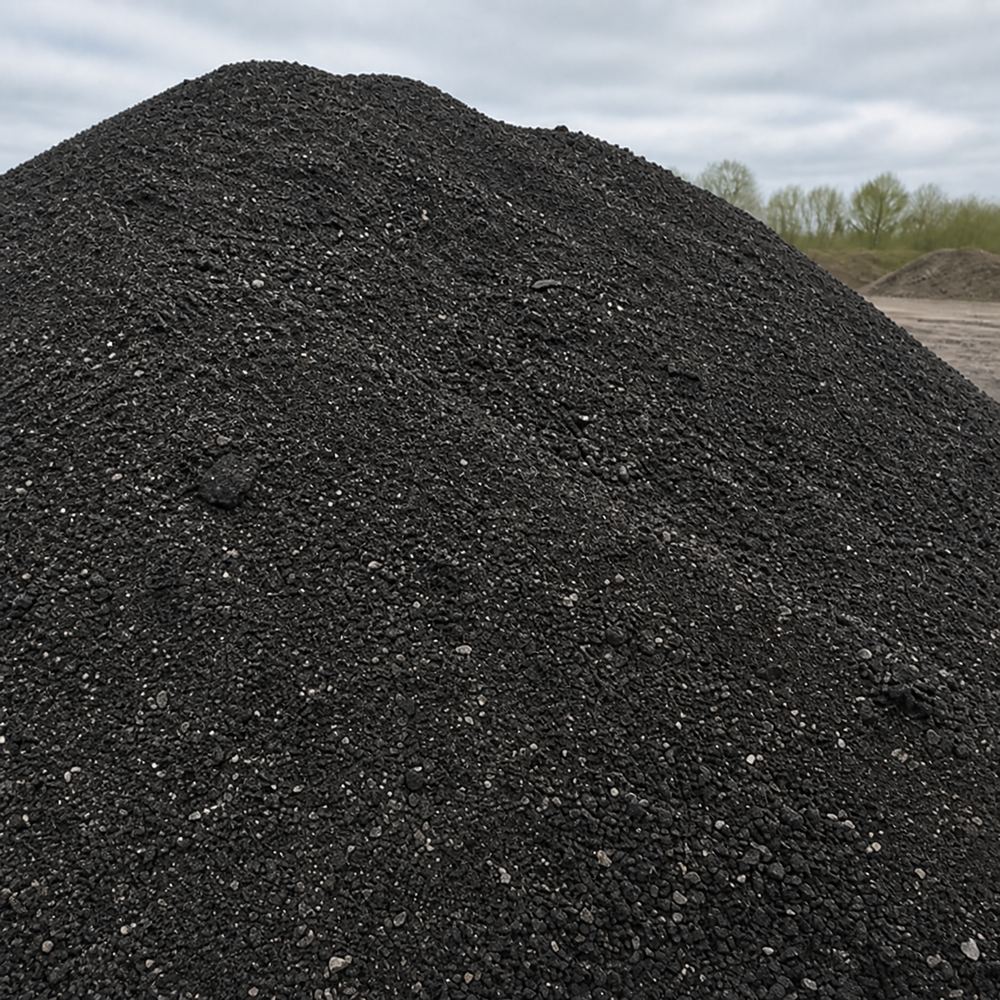
Reclaimed asphalt crushed to a gravel size, also called recycled asphalt, asphalt millings, or RAP. The particles still carry old asphalt binder, so summer heat and traffic slowly re-bond the surface into something firmer than loose gravel. That is the real appeal: a semi-paved feel at a gravel price.
Use it for: driveways, parking areas, and temporary roads where you want a tighter, lower-dust surface without paving.
Sold and quoted by the cubic yard.
Good to know: it needs heat, traffic, and compaction to set up, and it stays a granular material. It firms up. It does not become pavement, and it can still want an occasional regrade.
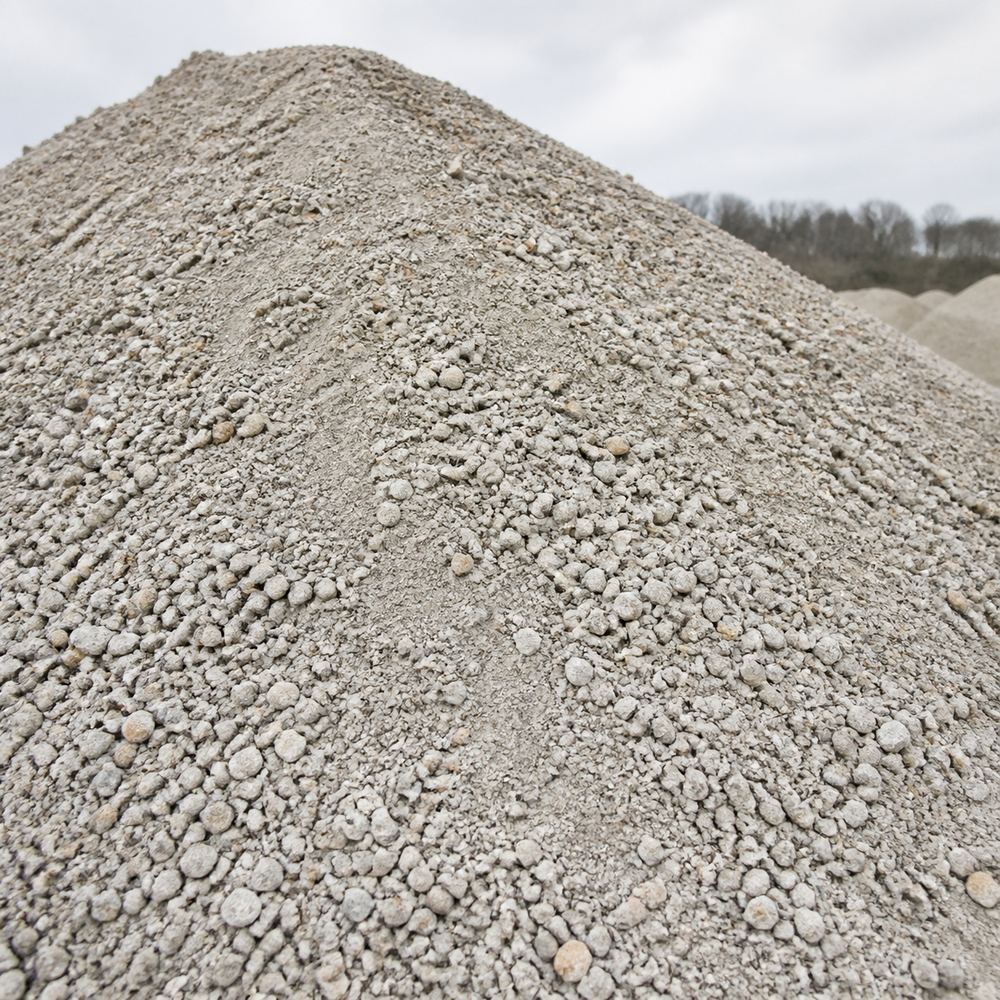
CRUSHED CONCRETE
Demolished concrete crushed and screened into a recycled base aggregate. Lighter than virgin rock, drains well, and reuses material that would otherwise be landfilled.
Use it for: driveway and pad base, base under pavers and slabs, general fill, and drainage-forward base work.
Sold and quoted by the cubic yard.
Good to know: crushed concrete runs dustier than Class 5 or crushed asphalt as an exposed surface. It shines as a base layer; if you want it on top, ask about topping options when you call.
CLAY AND SHORELINE.
The two products for the edge of the land and the edge of the water, and the two where honest expectations matter most.
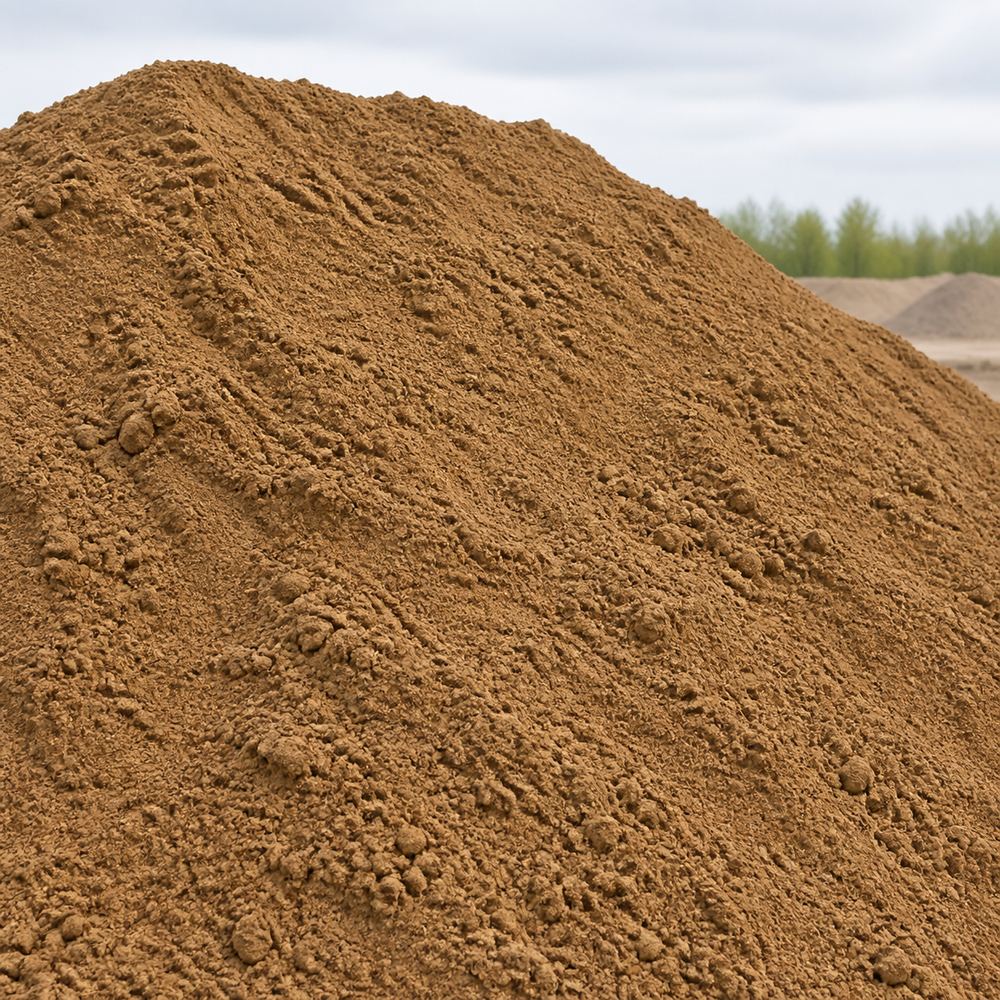
SCREENED CLAY
Natural mineral clay run through the screen to pull rock, roots, and debris. This is clay, not topsoil, and it is a material most gravel yards do not carry at all.
Use it for: pond and water-feature bottoms, berm and low dike cores, capping a road or driveway subgrade, and horse arena or corral subbase.
Call for availability and how it is handled for your quantity.
Good to know: clay sealing performance depends on your site and on compaction, not just on the clay. We will talk through whether screened clay fits your pond or berm, and anything holding back serious water belongs in front of an engineer, not just a supplier.
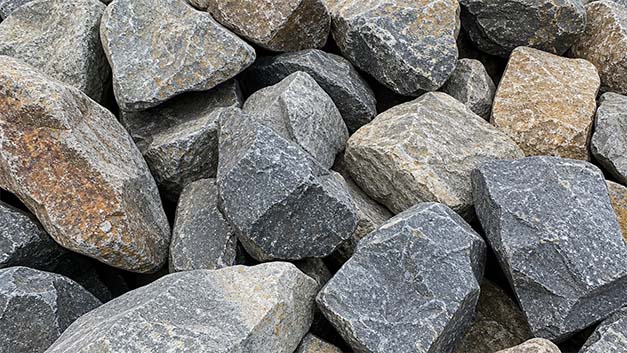
RIP RAP ROCK
Large angular rock sized in classes under MnDOT Spec 3601, placed to armor shoreline against ice, current, and waves. In lake country, this is the product that saves banks: properly placed rip rap lets ice ride up and over instead of shoving the shoreline back.
Use it for: lakeshore armor, culvert inlets and outlets, ditch and pond edges, and stabilizing steep slopes.
Sold and quoted by the cubic yard.
Good to know: the DNR allows permit-free rip rap only within limits, roughly natural rock 6 to 30 inches, placed no more than 6 feet waterward of the ordinary high water line, on a slope no steeper than 3 to 1, over a filter layer, along no more than 200 feet, and only to fix existing erosion. If your project falls outside any of that, a permit comes first, and we will point you to the DNR process before you order.
HOW MUCH DO YOU NEED.
The calculator on this page turns length, width, and depth into cubic yards, the area covered, and roughly how many tandem loads. Because Storlie sells by the yard, the math is the same for every material: length times width times depth in feet, divided by 27. Treat every result as planning math.
Want quick napkin math first? One cubic yard covers about 160 square feet at 2 inches deep, about 110 square feet at 3 inches, and about 80 square feet at 4 inches. Gravel settles as it compacts, so order a little over the finished depth you want and we will help you land on the right number.
Rip rap is the exception: coverage math for large stone is unreliable, so shoreline jobs are quoted against your footage. Call with the length of bank you need covered.
Close is fine for planning. For an exact quantity and a delivered price, call Storlie at 218-556-5898.
Storlie Pit Desk
See How Many Yards You Need
Measure the area, pick the material, and get a cubic-yard estimate you can call in.
How it works: Length (ft) × width (ft) × depth (in) ÷ 12 ÷ 27 = cubic yards. That is the same unit Storlie sells and quotes in.
PICKED UP OR DELIVERED.
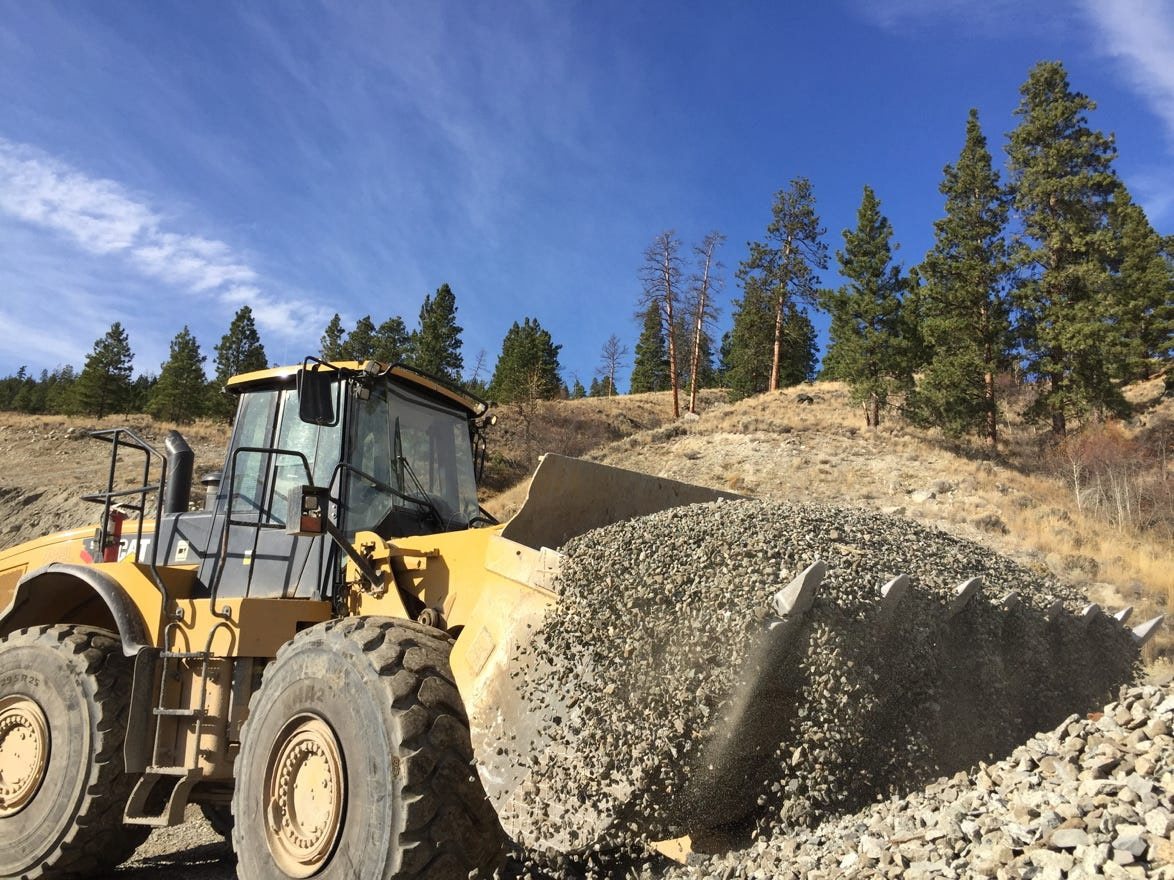
Pickup is available for appropriate materials and locations. Call before bringing a truck or trailer so the team can confirm current stock, the correct pit, loading hours, and how many yards your truck or trailer can safely carry.
Would rather have it delivered? Storlie trucks run tandem loads to job sites across the region. The practical source depends on the material, delivery address, current stock, truck access, and schedule. Call even if you are unsure whether the location fits; the team will tell you straight what is available and whether the freight makes sense.
Spring is the one wrinkle. Frost laws limit truck weights on Minnesota roads for a few weeks every spring, which can affect load sizes and timing. Ask when you call.
READY TO ORDER.
Tell us the material, quantity, address, and whether you want delivery or pickup. We will confirm the source, price, and timing.
Call 218-556-5898, or request a quote online and we will call you back.
FAQ
Is everything sold by the yard?
Yes. Storlie sells and quotes pit products by the cubic yard, so the number from the calculator is the same unit you order in. Rip rap is quoted against the length of shoreline or slope you need covered.
How many yards are in a tandem load?
Plan on roughly 10 cubic yards per tandem load. The practical load depends on the material, the truck, and spring road restrictions, so confirm the load count when you order.
What is the difference between sewer rock, septic rock, and washed rock?
Around here they are names for the same kind of product: clean stone washed nearly free of fines so water can move through it. Our product name is sewer rock. If you came looking for septic rock, drain rock, or washed drainfield rock, this is the pile you want.
What gravel should I use for a new driveway?
Class 5 is the standard choice because it compacts hard and sheds water. If you want a tighter, lower-dust surface that firms up over a summer of sun and traffic, ask about crushed asphalt. If you want the whole driveway built or repaired, not just the gravel, see driveway construction and repair. For a yardage sized to your driveway and current delivered pricing, call Storlie at 218-556-5898.
Do you have sand for a septic mound system?
Mound systems need sand that matches the design spec on your permit, and that spec is tighter than most people expect. Bring us what your septic designer calls for and we will tell you straight whether our washed sand fits the job or what to source instead.
Is crushed asphalt or crushed concrete better for my project?
Crushed asphalt binds tighter over time and runs lower dust, which favors exposed surfaces like driveways. Crushed concrete drains well and costs less as a base under something else. Tell us the project and we will help you pick.